What I missed at CES this year

A couple of weeks ago, CES2021 was held. This is the mega consumer electronics show (that’s where the CES comes from) held annually in Las Vegas. It’s attended by 100,000 folks, and the exhibits stretch across millions of square feet. This year, CES was held virtually.

Not that I would have attended in any other way. This is a consumer-oriented show, and Critical Link’s work is on the scientific/industrial side of the application spectrum. Still, I’m a tech guy, and a gadget guy, so I’m always eager to browse the reporting to see what I’m missing by not being there.

There was, of course, the usual amount of gimmickry. Last year’s smarter toilet was joined by an even smarter bathtub. And something called a smart lipstick, which lets the user create their own personal color blend. It will retail for about $300, and my wife is definitely not interested.

A few things did catch both my eye and my interest.

General Motors revealed its battery-powered personal aircraft, GM’s Cadillac entry into the air taxi future.

The sleek, electric vertical take-off and landing aircraft would be GM’s first foray into aerial mobility, and the company says this four-rotor aircraft is powered by a 90-kWh EV motor at speeds of up to 56 mph. Beyond that, details are scarce  — GM stopped short of offering more technical details, let alone committing to production or detailing a time frame in which we can expect to see these eVTOLs, as they’re known, in the air. Based on the images, this looks like a single-seat drone, presumably for short urban hops executed autonomously. (Source: CNET.)

This is bound to cost a lot more than the $300 smart lipstick, but what kid dreaming about a “flying car” didn’t grow up into an adult dreaming about a personal air taxi?

A little more down to earth is the ColdSnap from Sigma Phase, which promises to be the Keurig of ice cream makers. Like Keurig, it makes a single serving, only instead of coffee, it dispenses a cup of ice cream, or a frozen margarita. Unlike Keurig, which you can get a K-Cup for for about fifty cents, the pods are projected to cost $2.50 – $3.00 when the ColdSnap is available next year. The device uses a souped-up version of the same compressor/condenser technology used in fridges and freezers.

The company says the machine simultaneously pulls heat from the pod, creating a cooling effect on the liquid ice cream mix, and engages a part within the pod that churns the ingredients during the cooling process. Air is sucked into the can to make the required loft in the ice cream. (Source: CNN)

The machine will cost about $500, and is a heavy-weight appliance by countertop standards, weighing in at 50 pounds. But the weight trade-off makes it possible for the ColdSnap to produce a cup of ice cream in 60-90 seconds.

LG showed off the LG Rollable, an expandable smartphone, which it expects to release this year. A cooler variant (cooler to me, at any rate) on the foldable phone. Foldables were introduced a couple of years ago, with great fanfare, but they took a while to perfect. The ones on the market now are pretty reliable. But the foldables just seem like a more conventional technology than the rollables, i.e., nothing that we haven’t seen before in a similar form factor. The rollables, on the other hand, have an expanding and contracting screen. Way cool. The downside, apparently, is that the screens are somewhat fragile and, unlike the foldables, which fold in to protect the screen, the rollable screen is unprotected. So users need to be ultra-careful. This will all get worked out, and this is one technology I’ll be keeping my eye on. Much as I like ice cream, I’d rather have a rollable phone than a Keurig-style ice cream maker. (And, realistically, I know I won’t ever get my hands on a personal air taxi.)

As always, seeing what’s up at CES was great fun. Even though I won’t be there, I really do hope that when 2022 rolls around, they’ll be able to convene for real. When it comes to technology, there’s really nothing like hands on!



The (Smart) Puck Starts Here

The NHL season kicks off today, a few months later than normal. But, COVID…

Hockey, like most other sports, has been introducing increasingly sophisticated tracking technology for a number of years now, and there’ve been pucks in play with some level of “intelligence” since the mid 1990’s. But this year, when the puck drops, that puck will be smarter than ever, and a lot smarter than one might expect from a six-ounce hunk of vulcanized rubber.

The new pucks have a small embedded battery, a circuit board, and infrared light tubes that shoot out 60 pulses per second.

The key tech element of the new puck is its battery-powered infrared light, the beam essential to a triangulation system that also incorporates 16-18 cameras mounted inside every arena. Every NHLer also will be outfitted with an infrared tag — approximately the size and shape of a pack of gum — slipped into the backs of their sweaters.

All the light beams and all the associated PPT technology, other than cameras mounted in the ceiling and elsewhere in the arena, will not be visible. Every move of puck and players will be tracked, recorded, and all of the info streamed into a giant data punch bowl. (Source: Boston Globe)

Getting technology to work in a hockey puck is no small feat. First, there’s the cold to contend with. Pucks are chilled before they’re put in play, and then they’re being zipped around on ice. That’s cold. And cold isn’t generally all that kind to electronics. Then there’s the fact that the puck is being slapped around full force by professional athletes, armed with sticks and moving pretty darned fast on their skates. Sometimes the puck is propelled into the boards.

So the new pucks had to be put through some very rigorous testing.

In addition to the physical testing to make sure that the technology could stand up to the elements the pucks would be facing, the NHL also had to make sure the puck feels right to the hockey players. Because if there’s one thing that most high-level athletes come equipped with is pretty sophisticated human-based sensors that can tell if something feels “off.” Once the players couldn’t tell the difference between the smart puck and the not-so-smart pucks they were used to, the newbies got the go ahead.

The tracking technology (from a North Carolina company called SMT):

Generates over 1 million 3D coordinates/data points over the course of a regulation game…Through embedded tracking devices, fans can see real-time data like a player’s ice time, zone times, speed and travel. (Source: SMT)

This will allow broadcasters to go to town with graphics, provide analysts with a greater ability to figure out what’s going on, help (maybe) improve player performance, and presumably enhance the fan experience. Capturing all this information will also give gamblers more and more crazy little stats to bet on in real-time. Not necessarily a change for the better, but it’s inevitable.

The pucks aren’t cheap to produce: $40 per puck. But fans will still be able to keep any stray puck that ends up in the stands (sometimes in the side of some poor fan’s head or splashing down in a cup of beer). The tracking system will be deactivated once it’s out of play, but how much fun would it be trying to use it as a subject for a Tear Down Tuesday? I don’t know if you could get through the vulcanized rubber very easily. It would probably take the level of care and precision we see when anthropologists unearth a bone or piece of an artifact in an excavation site. Still, I wouldn’t mind getting my hands on those embedded innards to see what’s going on!

What a difference a decade makes

As the year ends, I always find it interesting to look back at what’s happened during the past year in terms of technology. While I was wandering around looking for ideas, I came across an article by Kevin Ryan- “The Ten Greatest Investions of the Past Decade” –  on Inc. from this time in 2019. Admittedly, I’m a year late with this, but Ryan’s summary of the major technology breakthroughs of the “teens” decade is still worth reading through if only to remind us of what a difference a decade makes.

First up, Google Assistant, which Ryan views as “perhaps the closest thing yet to what’s known as general artificial intelligence.” With its ability to make your spoken wish its command, Google Assistant can take care of a number of tasks (like setting up calendar reminders) and query the internet for the answers to important questions like ‘what teams made the Final Four in 2003?’ (And, yes, the Syracuse Orange was one of them.) Before you ask where Alexa and Sir are, according to Ryan “when it comes to accurately understanding what you want, it’s leaving Siri and Alexa in the dust.

Jumping from the consumer to the life-changing, there’s CRISPR, the gene-editing system.

Essentially a process for slicing out undesired strands of DNA–i.e., disease–and replacing them with new ones, the tech is being used by scientists and startups to try to cure diseases from sickle cell anemia to cancer.

As anyone who’s watched loved ones suffer from any number of terrible diseases, the promise that CRISPR holds is amazing, and a real cause for hope.

Love him, hate him, or love to hate him, Elon Musk is a true visionary. The SpaceX’s Reusable Rocket has cut the cost of getting a payload into space down to “one-quarter of what it cost a decade ago–which has helped make space accessible to startups.”

Venmo lets you quickly pay a small vendor, easily split the cost of a dinner with your tablemates, and speedily dispatch the virtual equivalent of cash to your desperate college student’s bank account. This year, Venmo may end up handling a payment volume of over $150 billion, and it has more consumers using it than most major banks do.

I’m not a big Venmo user, but I was an early adopter of the Nest Thermostat, and I’ve much enjoyed playing around with it.

Nest’s thermostat lets you preprogram a temperature schedule. It learns your habits over time and, based on motion sensing and devices that are connected to your Wi-Fi, can tell whether someone is home and adjust accordingly. This all lowers the amount of energy your home uses when you’re not home, saving customers money and the planet from unnecessary carbon emissions.

When the iPad was introduced in 2010, a lot of people didn’t know what to make of it. We had laptops. We had phones – and they were getting bigger and smarter. So who needed something in between? But tablets took off, and Amazon, Microsoft, Google and others got in the act. Now tablets are everywhere. For many, they’ve replaced the laptop entirely. In other areas – food services, retail, real estate, healthcare – they’ve introduced new efficiencies.

The ​Self-Driving Car is still a way from being fully realized, but it’s coming. And the technology involved is super-interesting, especially to someone like me who is both a technology guy and a car guy.

Thanks to machine vision and some super-sophisticated artificial intelligence, the technology promises to make the roads a whole lot safer, resulting in 90 percent fewer deaths, according to the most optimistic estimates.

Lyft and Uber are both very interested in self-driving cars, which means that, somewhere down the line, they’ll do for their own drivers what they did for taxicab drivers. I.e., replace them. Truckers will face a similar challenge. Any industry involving drivers is likely to be severely disrupted.

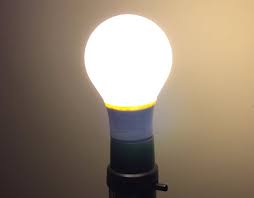
Sure they cost more than Edison’s incandescent bulb, but the Consumer LED Light Bulb is more energy efficient.

The bulbs use 20 percent of the energy of their incandescent predecessors and can last 25,000 hours–with average use, that’s more than a decade.

Thanks to regulations on energy efficiency, bulb producers like Philips and GE have jumped into the market big time.

What the Nest Thermostat did for home heating, the Ring Doorbell has done for home security. Using your smart phone, you can see and talk to whoever’s at your door. (Interesting side story: Shark Tank rejected the Ring idea in 2013. Fast forward a few years, and Amazon bought the company for $1B.

Elon Musk is back again on the list with the ​Tesla Powerwall solves the problem of storing excess solar energy.

Tesla’s Powerwall, launched in 2015, offers that ability with a high level of sophistication, letting you program your usage to collect energy during off-peak hours, then consume it at peak times.

Lots of other things happened during that last decade. Smartphones got smarter. And all sorts of things from dog doors to refrigerators to diapers got smart. Uber and Lyft took off, as did all sorts of technology-enabled apps for seeing to tasks like ordering take-out food (success!) and ordering quarters for the laundromat (not so successful!). In 2019, 5G broadband cellular was first deployed.

We’re one year into the Twenties now. Much of the exciting new technology being introduced has been in response to the pandemic. Wonder what the rest of the decade will have in store for us.


If you’re curious about why I picked the lightbulb as the image for this post, well, the lightbulb is a symbol of ideas, of inventions. And this one’s a Tesla light bulb, so…

Have you ever seen a building walking?

It didn’t happen all that often, but every once in a while, when I was growing up, there’d be something in the news about a house being moved from one location to another. As I recall, it was usually an old farmhouse in the path of development, and the owners wanted to keep their home’s good bones and old-fashioned charm. The house would be lifted off of its foundations, placed on an ultra-wide flat bed, and slowly – very slowly – transported to its new resting place, where a newly poured foundation was awaiting it.

As a kid, I was intrigued by the process, but I haven’t given it a lot of thought since.

Then I happened upon a story about an 85-year-old school in Shanghai that was moved to make way for commercial space. The government wanted to preserve the structure because of its historic nature, and will be using it as a preservation and cultural center.

Unlike the buildings I heard about back in the day, the school building was pretty large – five stories, weighing in at 7,600 tons – and had an unusual t-shape. Obviously, this building was too large, and too awkward, to get slid onto a flatbed and carrying to its new home. Putting the structure on rails and sliding it along – another method for conveying a building from Point A to Point B – would likely have failed, as the structure would not have been able to tolerate the lateral forces need to move it along.

So, enter the “walking machine”. To move the building:

…engineers attached nearly 200 mobile supports under the five-story building, according to Lan Wuji, chief technical supervisor of the project.

The supports act like robotic legs. They’re split into two groups which alternately rise up and down, imitating the human stride. Attached sensors help control how the building moves forward, said Lan, whose company Shanghai Evolution Shift developed the new technology in 2018.

“It’s like giving the building crutches so it can stand up and then walk,” he said. (Source: CNN)

It took over two weeks to move the building (which in addition to being moved had to be rotated 21 degrees as well) a total of 203 feet.

“During my 23 years of working in this area, I haven’t seen any other company that can move structures in a curve,” [Lan] added.

Watching the building go for a walk is fascinating. (Here’s the link to YouTube.) I’ve had a long interest in robotics, and have gotten a real kick out of applications like Spot, the robotic dog from Boston Dynamics, which I wrote about earlier this year. I would have been happy as a kid just to see a tiny little farmhouse getting moved on a flatbed truck. I would have been over the moon to see this good-sized school building walking. The technology was developed by engineers at Shanghai-based Evolution Shift. Hats off to the Evolution Shift team. That’s quite an engineering feat!

‘Tis the season to shop for tech toys

Well, it’s December now, and anyone celebrating one of the gift-giving holidays that’s coming up is likely going into shopping overdrive.

Even though my kids are grown up, and there are as yet no grandkids on the scene, I always enjoy some virtual “window shopping” for tech toys. (Guess I’m a kid at heart.) So I had fun looking through PC Magazine’s take on this year’s hottest tech toys. (I’m not trying to sell you anything, but I put in the rough price for each toy, so you have a sense of cost.)

For a mere $75, you can get a Moose Toys Squeakee The Balloon Dog, which – unlike the balloon animal you pay the guy in the park a couple of bucks to twist together for you – makes all sorts of noises, and does all sorts of tricks on command. It’s cute, and maybe it’s just me, but this looks more like a toy that a grownup thinks a kid would like than a toy that a kid would like. Think I’d stick with the one from the guy in the park, which provides both the benefit of being a lot cheaper, but also – once it gets punctured or deflates – helps teach the kiddo how to deal with disappointment.

If you want to teach your preschooler colors and shapes, the Flycatcher Smarty JOJO encourages kids to look for something in a certain color. The kid flies the plane – manually: this is a digital toy that’s also old-school – over to the object, the Smarty JOJO (which costs $25) lets them know if they got it right.

For even younger kids, there’s the DMAI AILA (Animal Island Learning Adventure) Sit & Play which helps the kids learn not just colors and shapes, but letters and numbers. It uses AI to “adapt in real time to a child’s interest based on their physicl and emotional reactions.” Kind of like how parents do, no? Interesting. But, at $139, not cheap, either.

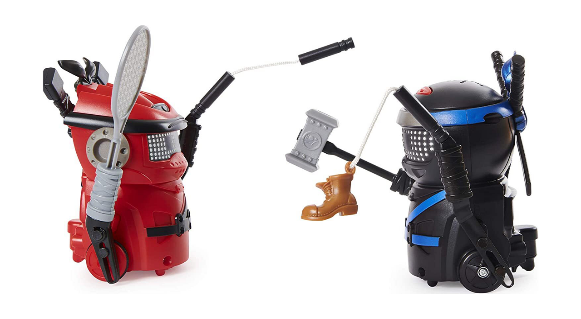
Spinmaster Ninja Bots look like fun. The kids get to pick their bot’s weapon, which are items like a tennis racquet or a boot, rather than guns, and “the weapon determines how the bot behaves.” The kids use hand gestures to train their bot to fight. For $40, it might not last forever, but it sure looks like fun. (Hint, hint.)

The same folks (Moose Toys) who bring you the pricey balloon dog also offer (for $39) an interactive pet, the Gotta Go Flamingo, that talks, moves, and sits on its little toilet singing. It’s for kids beyond potty training age, but, as we all know, for some kids potty humor never gets old.

For those who’d like an interactive baby doll, Spinmaster’s Mealtime Magic makes facial expressions depending on what (fake) food you’re feeding it, plus makes other noises and has a few things to say ($59).

The Sphero Mini Activity Kit is a toy (for $80) after my own heart. It’s a robot ball with a gyroscope, accelerometer and LED lights, and ideas and accessories for 15 projects the kids can try.

If you’re child already has a table, the Osmo Little Genius Starter Kit ($80) lets kids play around with letters, shapes, and costumes, which can then be scanned into an Osmo educational game.

Just like the Ninja Bots, the Ubtech Jimu MeeBot 2.0 Kit ($130) makes me want to be a kid again. Or at least have a kid on my list to buy one for. The kit comes with Lego-like parts – plus servo motors, a codable color sensor, three gears, programmable LED eyes and other accessories. There’s an app that walks you through building the robot, coding it, and playing with it. As a long-time robotics fan, I’m in on this one!


The Cubelets Curiosity Set ($250) is pricier than the Jimu, but it lets a kid build a perhaps-more sophisticated robot. It’s described as “lots of fun and educational potential.”

For Nintendo Switch, Mario Kart Live: Home Circuit ($100) is a physical, remote control toy cart (“driven” by Mario) that lets you set up virtual tracks and create your own obstacle courses around the house.

Way up the price ($500) and sophistication chain is the Ganker EX Robot, which is obviously for true robot fans. This unique robot comes with a controller you wear around your waist that lets the Ganker EX mirror your every move. You grab onto two joystick-like extensions to move the bot’s “arms.” And as you walk, run, and spin around, the Ganker EX does as well.

Another toy for older kids, and one that’s more affordable than the Ganker, is the Hasbro DropMix ($32). This is an electronic board on which players lay out cards that represent different songs. DropMix performs a remix, changing up the tempo and pitch.

Thanks to Carol Mangis and Jake Leary for pulling together a fun list to browse through.

3D Printed Housing: It’s happening!

I have a long-standing fascination with 3D printing. It’s such an interesting technology, and has been put to so many good uses. It’s great for product prototyping and manufacture. It has many medical applications, from prosthetics to some recent work where it was deployed to create much-needed parts for ventilators used for COVID patients. Musical instruments and jewelry can be crafted with 3D printers. They’re also being used to print food, like meat substitutes. (Don’t know if I’m quite ready for that.) Not to mention firearms, which may not be such a good thing if the printers get into the wrong hands.

Increasingly, 3D printing is being used to build houses. More on that in a bit, but I thought it might be useful to do a quick primer on 3D printing. So here I’ll borrow from an excellent overview I found on Interesting Engineering.

3D printing is part of a family of manufacturing technology called additive manufacturing. This describes the creation of an object by adding material to the object layer by layer.

The first step in the process is the creation of a model, which is typically designed using CAD software. Once the design is complete, the model needs to be digitally sliced, i.e., the model is broken down into the layers, and the data on each layer sent to the printer, which then starts working its magic.

It will begin to print out the model according to the specific instructions of the slicer program using different methods, depending on the type of printer used. For example, direct 3D printing uses technology similar to inkjet technology, in which nozzles move back and forth, and up and down, dispensing a thick waxes or plastic polymers, which solidify to form each new cross-section of the 3D object. Multi-jet modeling uses dozens of jets working simultaneously, for more rapid modeling.

In binder 3D printing, the inkjet nozzles apply a fine dry powder and a liquid glue, or binder, that come together to form each printed layer. Binder printers make two passes to form each layer. The first pass deposits a thin coating of the powder, and the second pass uses the nozzles to apply the binder.

In photopolymerization, drops of a liquid plastic are exposed to a laser beam of ultraviolet light, which converts the liquid into a solid.

Sintering is another 3D printing technology that involves melting and fusing particles together to print each successive layer. The related selective laser sintering relies on a laser to melt a flame-retardant plastic powder, which then solidifies to form the printed layer. Sintering can also be used to build metal objects.

Back to 3D printing in construction.

This isn’t anything new-new. Its antecedent – construction using prefabricated components – has been around for decades. And 3D printing has been around for years. But 3D houses are now being regularly constructed. (If you have a few minutes to spare, google “video of 3D printed house” and be prepared to be amazed.)

3D printing in construction is used in a number of different ways. These include extruding the building materials (concrete, wax, foam, polymers…), powder bonding and welding. The benefits are many: time to build is decreased, as are labor costs. And the houses are pretty rugged, built to last an estimated 50-60 years. With so many areas experiencing an affordable housing shortage, the 3D construction approach is poised to take off. (There are estimates that the cost of building a 3D printed house is nearly half than that of a conventionally-built home.) With 3D printing, there’s less construction materials waste, and less construction-vehicle pollution.

Many of the 3D printed houses are back yarders, built for use as a home office or guest house. In Mexico, an entire community of small 3D printed houses is going up to alleviate their housing shortage. Such houses can be built pretty quickly, so they’ll be a natural for recovery from natural disasters – definitely an improvement over a FEMA trailer. Increasingly, larger houses will be built this way as well.

And if you’re wondering what a 3D printed house can look like. Well, here’s one from Mighty Buildings. If you like modern, I’d say they can look pretty sharp:

The Silicon 100: “The building blocks of future wonders”

Of late, we’ve been focusing so much on stories around technology and the pandemic, that I ended up putting EE Times’ Silicon 100: The Class of 2020 on the backburner. But I finally got the opportunity to look through it and found it pretty interesting.

The list of “electronics and semiconductor startups that grabbed [EE Times’] attention during the previous year” is published regularly – this is the 20th edition – and it’s the first one that covers 100 companies (vs. 60). The leap from 60 to 100 companies is a big one, reflecting the fact that investors have a lot of interest in hardware startups (the primary focus here, as opposed to software or services).

In his introductory article, list curator Peter Clarke attributes the willingness to investors to open up their purse strings to hardware companies after snubbing them in favor of potential unicorns (those firms likely to grow quickly to a $1 Billion valuation) in the software and/or services space to the end of Moore’s Law.

Clarke saw Moore’s Law as the reason why investors had earlier focused their hardware funding on “the latest ASIC of SoC that could exploit the next manufacturing process node,” ignoring other electronics activity. As opportunities in this arena decreased, and the “smart money” went into Uber et al.

Many venture capitalist firms stopped investing in hardware altogether. Much of the hardware investment that remained came from strategic investors, such as Intel, Samsung, Qualcomm, and Bosch, or from government-backed regional development boosters who hoped to encourage job creation.

But then, as the end of Moore’s Law came into sight, R&D activity moved out into other areas.

Engineering creativity extended into a slew of re­lated activities, including alternative computational architectures and business models such as open-source hardware, RF communications, sensors, 3D assembly and packaging and chiplet-style manu­facturing, and human-to-machine and machine-to-machine interfaces. Some of these activities required far less funding than the $100 million or so needed to get a leading-edge digital chip out the door, and so they started to gain some traction.

It also became clear that software and networking architectures that had proved powerful in the cloud running on servers could be supported by fresh architectures and ICs to reduce power consump­tion and potentially transfer similar functions to the edge.

The result? An explosion over the past few years of hardware funding – and the explosion of the number of startups that EE Times deems “worth watching.”

Here are the buckets – pretty much all of which Critical Link has our hands in – that the companies worth watching fall into:

  • AI / neural networks / machine learning
  • semiconductor manufacturing
  • materials research (Si, GaN, SiC, etc.)
  • analog ICs
  • SoCs
  • memory ICs
  • FPGAs
  • power ICs
  • energy harvesting
  • signal processing
  • wireless chips
  • automotive electronics
  • IoT technologies
  • sensors
  • MEMS

Of these, “the consensus now is that artificial intelligence, machine learning, 5G communications, and transportation solutions are set to drive the industry onward and upward for the next several years.”

Geographically, the US continues to rule the roost, accounting for 49 companies on the list. The preponderance of these (40 in total) are in California. There’s only one company from my home state of NY, and it’s in the Bronx, not upstate, where Critical Link lives. China, with thirteen companies on the list, ranked second, followed by England with nine. Israel had seven of the startups, Canada five.

After listing all 100 startups (with a thumbnail sketch of what they produce and who has invested in them), they take a deeper dive on ten of the companies.

The Silicon 100 is gated content that you’ll have to register for, but it’s well worth the read. I’m looking forward to the “future wonders” that will be built off all of this technology. I’m pretty sure that at some point, we’ll be looking at a number of these companies as component providers for our boards.


The Electronics Industry Responds to COVID – Part 4

We’ve now come to the end of set of posts I’ve been doing that summarizes EDN Aspencore’s series of interesting and informative articles on the response that the electronics industry has been making to the coronavirus crisis.

My first post covered Majeed Ahmad’s “sneak peek” at the design ecosystem being built up around helping us get through the pandemic. Bluetooth technology, especially when used in bracelets, was the topic of the second entry in my series. I then addressed technology used in social distancing. This post covers the articles on touchless control panels and wearables, which our touchless in their own right, if you don’t factor in that they’re touching you, as well as the final article, which gets into molecular test technology. Anyway, here goes.

In Touchless control panels facilitate germ-free interactions in public places, Rich Quinnell discusses how engineers are harnessing existing technology to build solutions that will help us avoid pushing the button in the elevator, or choosing our menu items in a fast-food kiosk.

Holo Industries is putting hologram technology to good use by enabling devices to “project a floating image of the controls that the user can activate and senses the user’s fingers as they “touch” these mid-air controls. Holo’s solution isn’t being built from scratch. It uses a projection plate from Asukanet that’s been around since 2017.

This plate uses a transmissive dihedral corner reflective array to project an object’s image into space above the plate. The image is optically “real,” meaning that the light coming from the mid-air image travels to the eye in the same way that light from a physical object would travel…To the viewer, this appears as if the physical object were floating in space, allowing one to look at it from various angles to see around the sides and even to photograph it.

It also employs a touch sensor, based on IR emitters and receivers, from Neonode Technologies that detects where the user’s fingers are and how firmly they’re “pressing.”  This is even old tech, available since 2014.

Holo Industries added their own magic to the mix to pull it all together.

That’s the power and challenge of systems design: combining diverse elements developed by someone else into a functional solution to problems the element designers may never have imagined.

Yoelit Hiebert, in Can wearable devices help detect COVID-19 cases?, focuses on the Oura Ring used by the NBA and WNBA in their bubbles to keep their athletes COVID-free. (We had a post on this topic in July.) Yoelit goes into some depth on the technology, which makes for an interesting read. Whatever role the Oura Ring has played in its success, by all accounts basketball has done an excellent job of conquering COVID. By no means perfect, but all things considered, quite good.

Achieving fast, accurate patient diagnoses with molecular test technology, by Connor Connaughton and Eduardo Bartolome, covers “how molecular diagnostics work and what components can be used in the main building blocks of the analyzers required.”

There are a number of different ways to detect a virus. Molecular diagnostics “looks for know segments of DNA specific to the suspected infectious agent.” In their article, Connaughton and Bartolome describe how molecular diagnostics work. RNA/DNA is extracted and, if there’s not enough target DNA detected on the first pass, the DNA is amplified via cloning and multiplication.

There are a number of hardware building blocks that go into making all this work – all pretty complex stuff. (As you can imagine.)

The coronavirus is going to be with us for a good long time. And lurking around the corner, somewhere, somehow, lurks yet another pandemic. The electronics industry jumped in fast to help us conquer COVID, and the work that’s being done will hold us in good stead in the future.

Keep Your Distance: The Electronics Industry Responds to COVID, Part 3

Over the summer, EDN Aspencore published a series of articles on how the electronics industry has responded to the COVID pandemic. In term, I’m doing a series of blog posts summarizing these articles. In my first post, I discussed Majeed Ahmad brief, which offered a “sneak peek into the brand-new design ecosystem built around the fight against the coronavirus pandemic.” My next post covered the articles on the use of Bluetooth technology, especially as used in bracelets. In this piece, I’ll focus on the articles that addressed technologies – ultrasonic sensors and SDK’s – used for social distancing and contact tracing.

In Ultrasonic for Social Distancing Tags, Junko Yoshida argues that this technology “might just be the wireless technology best suited to enabling contact tracing and social distancing.” The need to get employees back to work is heightening demand for “for apps and wearable devices that can alert workers when they violate social distancing precautions and come too close to one another…[and that can] keep track of which workers have come into close contact with whom, when and for how long.”

There are a number of different embedded devices under consideration: bracelets, clips on lanyards, badges, the ubiquitous smartphone – and there are a number of wireless approaches in contention. One of these is ultrasonic sensors used in tag solutions.

For measuring social distance, accuracy is the prime attribute. Ultrasound can provide accuracy at less than 1 cm, which is vastly superior to the other wireless technologies out there, including Bluetooth Low Energy (BLE). Privacy (or lack thereof) is another perceived weakness when it comes to BLE.

Proponents of ultrasound also argue that it’s preferable to ultra-wideband (UWB) when it comes to footprint – UWB requires an antenna – and power consumption. They also claim that, when it comes to false positives, ultrasound is a better choice.

Overall, this article is an interesting look at the different devices and wireless technologies that will help the workforce safely back to work. (It’s worth noting that the strong arguments made for ultrasound came from an ultrasound company.)

SDKs finetune BLE SoCs for contact-tracing, social-distancing designs by Majeed Ahmad, writes that:

While Bluetooth Low Energy (BLE) solutions are finding a way into a variety of products to help slow the spread of COVID-19, the current technology for distance measurement and positioning—received signal strength indicator (RSSI) technology—is based on measuring the strength or power of the received radio signal. However, that is inherently flawed due to the sensitivity of objects in the radio path blocking or reflecting the radio signals.

Software can find a way around this, with SDKs that can take care of the distance measurement issues. A couple of different companies offer SDKs for their BLE SoCs. Dialog Semiconductor’s SDK enables their chips to “chips to interleave BLE data packets with constant tone frequency exchanges, which in turn, allows the on-chip 2.4 GHz radio to generate the signals needed for phase-based ranging.” This improves their BLE chip’s accuracy for distance measurement and makes them contact-tracing ready.

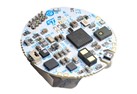
STMicroelectronics offers a reference design built around their Bluetooth SOC. The reference design “enables engineers to implement private and anonymous tag provisioning and notifications in devices such as bands and bracelets in outdoor or closed professional environments like factories, offices, and medical facilities.”

Good to know that there’s so much work going on to make it possible for companies to ensure the safety of their workers.


The Electronics Industry Replies to COVID – Part Two

Two weeks ago, we kicked off a set of blog posts focused on a series of articles from EDN/AspenCore on how the electronics industry has been responding to the pandemic. (These articles appeared in EE Times.) In my first post, I summarized an article by Majeed Ahmad that offered a “sneak peek into the brand-new design ecosystem built around the fight against the coronavirus pandemic.” Today, I’ll be covered several other pieces from the EDN series.

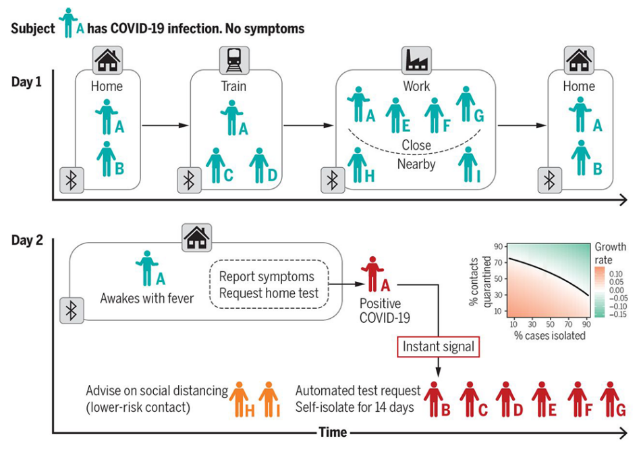
Hacking Bluetooth for COVID-19 contact tracing: With the virus spreading as rapidly as it has been, Asem Elshimi points out that “technology can shorten the delay between confirming an infected case and isolating all contacts,” noting that South Korea and Germany have effectively deployed digital contact tracing, while warning that tracing technology is promising but still maturing. He also warns that we don’t go overboard on how digital tracing – or any technology, for that matter – is a panacea. Digital tracing should, in fact, be used to supplement the more traditional approaches, not replace them.

That said, Bluetooth Low Energy (LE) is on an awful lot of smartphones, and the overwhelming majority of American adults own a smartphone. Every smartphone equipped with Bluetooth radio could be used to broadcast and receive encrypted messages from phones that are nearby. Records of all these contacts could be kept in the cloud. When someone is diagnosed with COVID-19, all their contacts can be notified and asked to quarantine. This solution is imperfect, and some Bluetooth features would need to be worked around. But the ubiquity of Bluetooth technology makes this approach worth pursuing.

Received signal strength indicator (RSSI) technology may offer the fastest path to rolling out Bluetooth-based contact tracking. There are downsides to it (including the possibility of too many false negatives and false positives), and the distance resolution is limited. Still, it holds promise. An alternative to RSSI is using Bluetooth direction-finding technologies, which would work better in those areas where RSSI is prone to false positives and false negatives. Unfortunately, most smartphones on the market are ready for RSSI, not for direction-finding technologies.

How about bracelets, rather than smartphones? In his next article on Bluetooth, Asam proposes the idea of Using privacy-centric Bluetooth bracelets for COVDI-19 contact tracing.

The alternative to smartphone solutions is wearable Bluetooth tags or bracelets. Bluetooth bracelets can be developed at a cost of $1 or $2 each, and they could operate for up to 10 years on a coin cell battery. Bluetooth bracelets can be manufactured using Bluetooth direction-finding technology as well as other more accurate Bluetooth location measurement technologies. This ready-for-deployment solution can be used to tackle densely populated urban environments where smartphone RSSI distance resolution is insufficient.

In the foreseeable future, highly-dense commercial environments, such as hospitals, offices, and retail spaces, could be populated with Bluetooth direction-finding gateways. People would be asked to wear Bluetooth bracelets to enter buildings and facilities. Every individual would actively check whether he or she is exposed to a confirmed case or not.

With any location tracking technology, privacy is always an issue. In this area, bracelets which, unlike smartphones, don’t need to know anything about who you are – they’re “identity-blind” – is a better solution.

In System design considerations for contact-tracing Bluetooth bracelets, Asam lists a number of things designers should keep in mind, including whether to use the bracelets for contact-tracing only, or to incorporate more sophisticated health-tracking technologies; just how the bracelet is going to be communicating with the Internet; and how the bracelets will be decommissioned once the COVID emergency is over. A final consideration: how to dispose of the bracelets once they’re no longer useful. We won’t want to let all the electronics turn into e-waste!

Hardware and software for building contact-tracing Bluetooth bracelets  rounds out the mini-series on Bluetooth bracelets.

A wearable bracelet design consists of a Bluetooth SoC, an antenna, a coin-cell battery, and the software that enables it to do its work.

…While these are simple and well understood components, the choices you make in the initial design can have significant impact on time to market and cost. Semiconductor solution providers often offer design references for product designers. Utilizing design references can expedite the design process and achieve optimal performance of the SoC. Alternatively, semiconductor companies also offer system-in-package (SiP) modules that integrate all the needed components inside a package.

Asam includes a helpful table from Silicon Labs illustrating how different hardware components impact RF performance. He then discusses the importance of software, which may or may not be provided with the SoC, and the connectivity challenges that need to be addressed.

All in all, these articles offered an interesting look at a technology that may prove helpful to our getting on top of the COVID-19 pandemic.