Running on Technology

This past Monday should have seen the running of the Boston Marathon. I’m not a marathoner, but it’s hard not to pay just a bit of attention to Boston, the longest running (since 1897) marathon in the world. The event, like so many others, has been postponed due to the coronavirus pandemic, and will be run in September.

Still, Boston pretty much signals the start of marathon season, the first of the “Big Six” (Boston, London, Tokyo, Berlin, Chicago, New York) to be run (although there’s some close timing with London, which is also an April race).

With marathoning on my mind (if not in my feet), my thoughts naturally turned to running technology.

Technology is nothing new to the running game. There have been sensors – a technology that’s squarely in the Critical Link wheelhouse – to record runners crossing the finish line, and soon after that, to track progress throughout a race, for more than 20 years now. And running shoe improvements that relied on technical breakthroughs have played a big role in speeding up races.

Recently, in anticipation of the now-postponed Tokyo Olympics, there’s been a fair amount of news about Nike’s Vaporfly Alphafly Next%, which can supposedly increase a runner’s efficiency by an extraordinary 7-8 percent. (Other resource suggests that the efficiency gain is closer to 4 percent, but that’s still a lot.) Those efficiency increases are thanks to the carbon-fiber plate and the types of foam used in the shoe, technology used to store and recover energy when a runner needs a boost. The new Nikes have been okayed by running authorities, but it’s not clear when the next race they’ll factor in will be held. Whenever that race does occur, winning it will still be up to the runner. Even if I laced up a pair of Alphafly Next%, I don’t think I’d be winning any marathons!
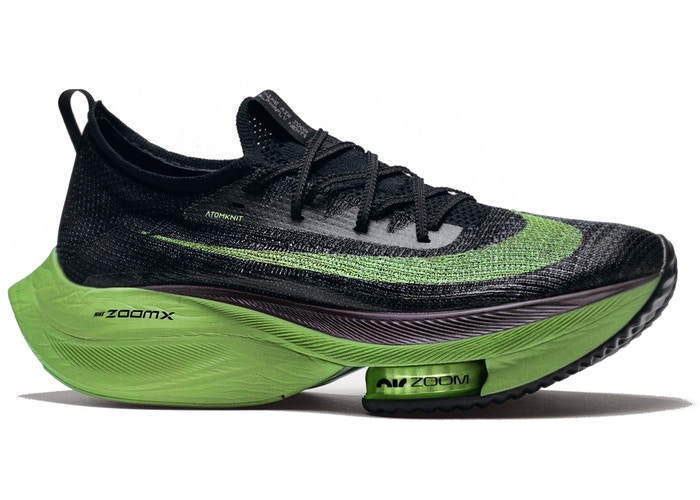
There’s more to running technology than the Alphafly Next%
There’s more to running technology than the Alphafly Next%, and last January Runners World did a roundup on the best running-related tech they saw at CES 2020.

There’s smart everything these days, and Runners World liked Nurvv Smart Insoles. At $300 a pop (that includes a tracker), the Nurvv:

…analyzes your gait through a sensitive network of 16 pressure points and beams that info to an app on your smartphone. The immersive live coaching feature then provides you with actionable changes to make while you’re running—like shortening your stride, increasing your cadence, or tweaking your footstrike—so you can prevent getting sidelined.

There’s a Beflex tracking chip embedded in Soul Blade earphones. The AI BioMech Engineer can track more than 20 metrics, including “distance, step length, head angle, footstrike landing force, and even leg stiffness and symmetry by detecting subtle nuances and changes in head motion.” It can then supply you with coaching tips when you’re on the run.

Whether you’re a runner or not, the MaxPro Portable Fitness Machine is “actually a fully functional, all-in-one smart gym that can be packed up small enough to wear on your back.” Forget putting weights on and off, this gym has dial ups that can add up to 300 pounds of resistance. Guess there’ll be no excuses now!

For a workout using a machine you can’t wear on your back, there’s a treadmill, the BodyEnergy, with handles that “help move the belt along with your feet,” helping runners learn to really use their arms.

There are a bunch of other products mentioned, but my favorite is the SigmaFit Transforma X Bag that comes equipped with:

…an internal UV light that promises to disinfect stinky shoes and dirty laundry, a solar-powered charger for your phone, heated pockets for food and drinks, an integrated scale that displays the bag’s total weight when loaded up, and pockets specifically designed for virtually everything you might need for a weeks’ worth of traveling: anti-spill for toiletries, anti-scratch for your phone, anti-theft for valuables, padded for your laptop, and easy-access for cash and cards.”

Only $250 for all that, and it’s small enough for carry-on – if and when we ever get back to flying.

Anyway, it’s a week when I’ve been thinking about running, and running tech came to mind just after it. As happens when an engineer starts thinking about pretty much anything.

From the MIT Technology Review: 10 Breakthrough Technologies for 2020 (Part Two)

In my last post, I described the first five breakthrough technologies listed in the March/April edition of The MIT Technology Review. In this post, I’m doing the remainder of the Top Ten. (In parentheses, after each section, I’ve noted the writer for that article.)

Satellite Mega-Constellations: This article starts with a fairly startling statement: “More than 3.5 billion people in the world still lack internet access.” That’s nearly half of the world’s population who don’t have access to the information, communication, goods, services, and entertainment that the internet offers. (Of course, they aren’t subjected to the junk, either.) SpaceX and OneWeb are working to remedy this problem by sending thousands of satellites into space that will provide broadband connections. This is feasible because the satellites have gotten smaller and less costly to launch. In the space shuttle days, a communications satellite cost nearly $25K per pound to put in orbit. And they weighed a lot more than today’s satellites. SpaceX is now sending trimmed down satellites into space that cost a mere $1,240 per pound. The upside is bringing access to the world’s poorest populations. The fear is that there’s nothing policing this increase in orbital traffic, which could result in a lot of collisions. (Neel V. Patel)
Quantum Supremacy:  Quantum computers hold a lot of promise, and there are hopes that at some point they’ll be able to solve problems at a faster rate than “classical” supercomputers. (I’m old enough to remember when there was nothing “classic” about supercomputers…) Two areas where quantum computers are expected to really shine are the ability to break cryptographic codes and simulate molecule behavior to speed up new drug and materials discovery. We’re not there yet – the article puts availability 5-10 years out – but last fall, Google achieved “quantum supremacy”, claiming that a 53 qubit quantum computer took 3 minutes to make a calculation that, in Google’s estimate, “would have taken the world’s biggest supercomputer 10,000 years, or 1.5 billion times as long.” Not so fast -literally- competitor IBM hollered. They believe the “speedup would be a thousand-fold at best.” Whatever the magnitude, we’re on our way to the world in which quantum computers will be ready to be used for something useful. (Gideon Lichfield)

Tiny AI: Even if we’re not consciously aware of AI in our lives, it’s there. Anyone doing much by way of search knows that it’s gotten a lot smarter when it comes to understanding what you’re looking for. And that’s just one example. As AI has gotten smarter, it’s been using more and more data, more and more computing power, and more and more cloud-based services. That’s a lot of carbon emissions, and a lot of potential loss of privacy. But there are now specialized AI chips that enable deep learning to occur locally, without calling on the cloud. E.g., Siri’s speech recognition now runs on the iPhone. Services that are taken care of on your smartphone will be faster and more private. There are a number of potential issues (the ones noted in the article are surveillance and deep fake videos), but hopefully these will be worked through sooner rather than later. (Karen Hao)

Differential Privacy:  2020 is the year of the US census. Aggregated census data is made available to policymakers and researchers, and the Census Bureau is required to make sure that no one can breakdown the aggregate data and figure out things about individuals – a boon for marketers and candidates, but a nightmare for the individuals. There are ways to “de-anonymize” census data, but the Census Bureau fights back by deliberately injecting “noise” into the data, switching things around while keeping the overall totals the same. This year, the Census Bureau will be deploying a technique called differential privacy “that makes this process rigorous by measuring how much privacy increases when noise is added.” Their efforts will be the largest-scale application yet of this technique. Let’s hope it works! (Angela Chen)

Climate Change Attribution: It’s not your imagination. We’re experiencing more extreme and dangerous weather events than ever before seen in recorded history. Now, thanks to increases in computing power and the availability more and more detailed satellite data, scientists are now able to attribute, with greater statistical certainty that global warming is behind these weather events. This will be useful in helping to identify “what kinds of risks we need to prepare for,” and can also help us figure out how to harden our infrastructure and our cities for a world in which climate change will wreak greater havoc. (James Temple)

Thanks, Tech Review, for an interesting read on breakthrough technologies.

Tech takes on the coronavirus

It’s probably safe to say that one of the things that’s first and foremost on all our minds these days is the coronavirus pandemic. And it’s not just on our minds, but in our everyday lives that are so impacted. We may be working from home – as many of our Critical Link employees are doing – or “home schooling” our kids while school’s out for the duration, or trying to figure out how to care for elderly family members. In many areas, most stores other than supermarkets and pharmacies are closed, as are restaurants and bars. We worry and wonder about our dual concerns: health and the impact of the pandemic on the economy.

In responding to coronavirus, technology plays an important role.

We’re able to work from home, and our kids able to learn from home, thanks to telecommunications, collaboration and conferencing technology. Healthcare providers are encouraging patients to handle routine problems via telemedicine. More specifically, some countries have begun using fever-detecting goggles to identify those who may have been struck by COVID-19. Drones are being used to disinfect areas. Tech companies are stepping up to ask how they can retool their manufacturing to scale or switch to producing devices used for diagnosis and treatment.

But one of the most exciting developments – one that shows off both the entrepreneurial spirit and engineering problem-solving know-how – is from an Italian engineering startup, Isinnova.

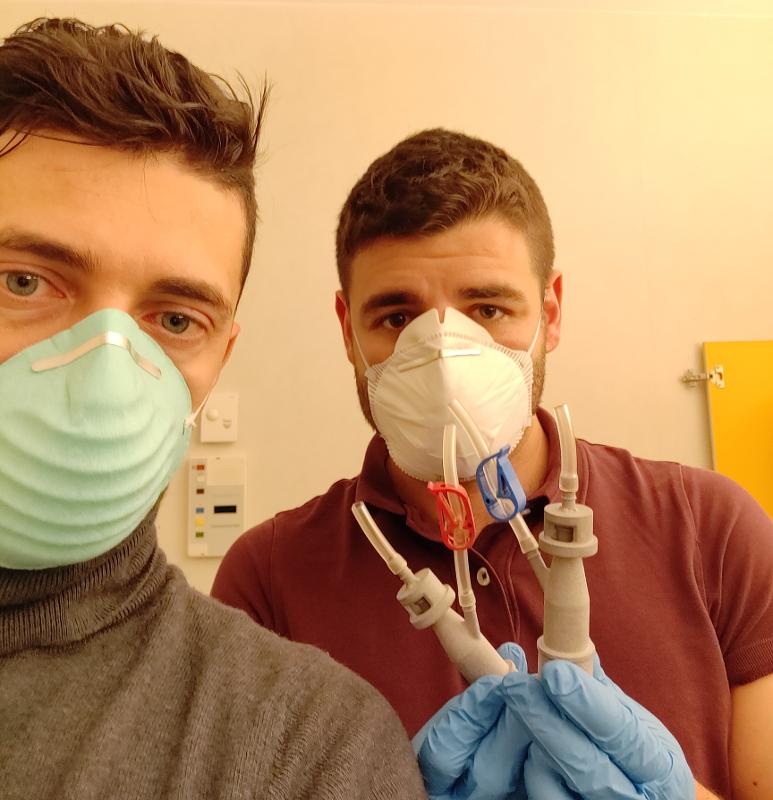
As we all know, Italy has been hit harder and sooner than most countries, and hospitals have experienced shortages of ventilators, and the valves they use to keep the oxygen flowing to patients. So Christian Fracassi, a materials science Phd who is Isinnova’s founder and CEO, along with engineer Alessandro Romaioli, jumped in to see what they could do to help out a hospital in Chiari, where coronavirus has been hitting especially hard. They were able to reverse engineer a critical valve:

Called a venturi valve, it connects to a patient’s face mask to deliver oxygen at a fixed concentration. The valves need to be replaced for each patient.

By Saturday evening, Fracassi had a prototype, and, the next day, he brought it to the Chiari hospital for testing. “They told us, ‘It’s good. It works. We need 100…We printed 100 of them on Sunday, and we gave all the pieces to the hospital. They are working very well.” (Source: Forbes)

There are obviously concerns about the intellectual property that belongs to the original valve manufacturer, and testing and quality concerns about 3D printed versions of a device that’s rigorously manufactured. But it’s no exaggeration to say that, with respect to the coronavirus, there’s a war on.

…the technology of 3D printing, which allows digital design of parts and the “printing” of them off a machine that creates them layer by layer, is ideally suited to emergency manufacturing because it is fast, cheap and can be done without a big factory.

The Isinnova team will be looking next to 3D printing of masks, another commodity in short supply.

Around the world, engineers are looking at ways to deploy 3D printing to help hospitals in need of essentials.

Way to go, engineers!

Overall, one silver lining aspect to the pandemic is the heartening way that so many have responded.

A final note: As you may have surmised from my last name, my heritage is Italian. So I much enjoyed seeing how, since they’re sheltering in place, so many Italians are making the best of it by standing on their balconies and singing together. Just google “Italians singing on balconies” if you need a lift. I especially enjoyed the one from Sicily, where everyone seems to own either an accordion or a tambourine!

Ciao for now – and stay safe.

From the MIT Tech Review: Breakthrough Technologies for 2020 (Part One)

I enjoy reading about technology. And I enjoy reading about the future of technology. So I much enjoyed the article on breakthrough technologies in the current edition of the MIT Technology Review. This is an annual listing of advances in technology that the Review believes “will truly change how we live and work.” (In parentheses, after each section, I’ve noted the writer for that article.) Here goes:

Unhackable Internet: As we become more and more reliant on the Internet for everything from monitoring our health to answering all our questions to doing our banking to getting our news to checking to see who’s ringing our doorbell – not to mention all the macro things like controlling our infrastructure and the nation’s security – there’s often a thought in the back of our minds: what if bad actors decided to take it all down? The answer is an unhackable Internet based on quantum physics. The Delft University of Technology is creating a small, short hop unhackable network that “relies on a quantum behavior of atomic particles called entanglement.” To move their work beyond one small city-to-city network, Delft and others are developing quantum repeaters, and the prediction is that a global quantum network will be possible by the end of this decade. But a smaller scale quantum network, stretching from Delft to The Hague, should be in operation b the end of this year. (Russ Juskalian)

Hyper-Personalized Medicine: One of the reasons that there’s no treatment for exceedingly rare diseases is that there’s no pay-off for discovering the cure for a disease that has so few sufferers. For those disorders resulting from unique genetic mutations, gene medicine – replacement therapy, gene editing, or antisense (which gets rid of or fixes faulty genetic messages) – is becoming a reality. “What the treatments have in common is that they can be programmed in digital fashion and with digital speed, to correct or compensate for inherited diseases, letter by DNA letter. So far, there have been only a few cases where “n-of-1” treatments have been used successfully. But it’s here, now, and we’re going to be seeing more of it. (Antonio Regalado)

Digital Money: If you’ve ever stood in line at Starbuck’s behind someone in their twenties, you know that fewer and fewer people use cash. Some outlets, in fact, no longer accept it. But what’s behind those smart cards and phone swipes is, in fact, “real” money tied to financial institutions and a country’s actual currency. But last year, Facebook introduced Libra, “a global digital currency.” It hasn’t actually launched, but it seemingly prompted China to speed its efforts in this arena. “Now China is posed to become the first major economy to issue a digital version of its money, which it intends as a replacement for physical cash.” Will China be the first to release an international digital currency? Will it be Facebook? We should see something happening on this front this year. I don’t know about you, but I’m going to miss dollars in my wallet and change in my change bucket. (Mike Orcutt)

Anti-Aging Drugs: Now that I’m well settled into middle age, I’m all for bringing on the anti-aging drugs. I don’t necessarily want to live forever, but that’s not what the antiaging drugs are after. Senolytics rid the body of “senescent cells.” These are cells that “can create low-level inflammation that suppresses normal mechanisms of cellular repair,” and can be used to, bye delaying disease onset, help alleviate conditions like osteoarthritis, eye and lung disorders associated with aging, heart disease, cancer and even dementia. Senolytics is one of several approaches. Some will be in large-scale clinical trial this year. General availability of anti-aging treatments is expected within five years. I’m not getting any younger. Let’s get cracking! (Adam Piore)

AI-Discovered Molecules: One of the reasons it’s so expensive to develop new drugs is that there are a nearly limitless number of molecule “ingredients” that could be used. The estimate is that there are roughly 1060 of them out there. Researchers have begun using machine learning techniques to sift through the mega databases that contain information on known molecules and their properties. AI techniques like deep learning are allowing researchers to find those molecules with the most desired properties, and to pinpoint the ones that are worth pursuing. We should see the results of these AI efforts within the next 3-4 years. (David Rotman)

These are the first five breakthroughs on the Tech Review list. Next time, I’ll run through the final five.


See Spot work!

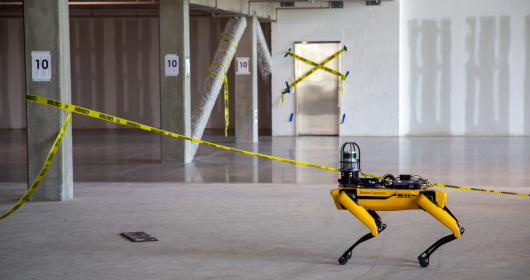
I have a long-time fascination with robotics, dating back to my grad school days. Plus I’m a dog person. When combined, these turn into an interest in Spot, the robotic dog from Boston Dynamics. I first blogged about Spot a couple of years ago (See Spot run!). At that point, Spot was in pre-release, with the promise of commercial availability in 2019. Well, as of last fall, Spot is out and about, and after years of showing us how it could run up and down stairs and perform some pet tricks, Spot is now being put to work.

Aker BP, an oil and gas firm, is one of the first companies to deploy the four-legged robot. They’re starting to use Spot to patrol a rig in a Norwegian Sea field. Spot will be checking for gas leaks and other potential problems, and alert the company if any follow-up is needed. HoloBuilder, a construction firm, has Spot patrolling construction sites, taking 360-degree images and letting engineers monitor work progress. HoloBuilder is also using machine vision AI to analyze the images. The State Police in Massachusetts, during a trial period, attached Spot to their bomb squad, and actually used it in a couple of operations.

Boston Dynamics doesn’t give away a lot of the tech-specs on its website, but they do reveal that Spot has on-board processing (love to know what’s in their system-on module) and an on-board camera that captures spherical images (love to know what’s the tech in that camera!), with an optional pan-tilt-zoom camera. Spot has and ethernet port and multiple power options (12/24V at 150W; 5V at 10W), and can be integrated with third-party sensors and other payloads. Because it operates in some pretty rugged terrain – construction sites, oil rigs, mines… – the electronics are sealed for dust and water resistance.

There’s also a Spot Software Development Kit (SDK) that includes an “accessible GRPC-based API and Python client library.” The SDK “enables your application to command poses and velocities, configure payloads, and access robot perception and payload data.” An additional SDK is in beta. This will support “access to mapping, navigation, and mission editing.”

I would just love to be able to get my hands on Spot, but they say it will be retailing for the price of a car. Guess I’ll have to be content with reading about, and looking at videos of, Spot at work. And with patting the heads of my own puppers. Somethings robotics will never replace!

————————————————————————————-

Information sources for this post: Technology Review, Fast Company, and Wired. Technical information on Spot is from Boston Dynamics.

Augmented Reality: it’s not just Pokémon GO

We’re hearing a lot about Augmented Reality (AR), which I kind of think of as Virtual Reality’s “kid brother.” Rather than offering a fully immersive experience in a fully virtual world for the user, AR layers digital elements on top of the real world, and the user interacts with actual physical objects. The market is growing, thanks in large part to the fact that most of us are already in possession of a device that supports AR: our smartphones. And there are many interesting application areas.

A number of these were laid out by Alan Seal in a recent post on vXchnge. Healthcare is one arena in which he predicts AR adoption for training on surgical techniques, among other uses. The military is also investing in AR. “By incorporating data drawn from multiple sources, augmented reality devices will allow soldiers to identify threats, access GPS data, and obtain remote views of the battlefield.” Then there’s Pokémon GO which is the world’s most successful (or annoying, depending on how you look at it) application of AR technology to date. Since its release in 2016, it’s been downloaded more than 1 billion times.

Retailers are getting in the AR act. The example Seal sites is IKEA, which lets shoppers see how that new piece of furniture will fit in their living room “by projecting a digital version of the piece right into their smartphone camera.” AR will also be adopted in the classroom. Students will be able to do more interactive learning, which will especially benefit those with different learning styles and challenges. We’re also seeing AR put to automotive usages, most notably in heads-up displays “that project information like speed and mileage in the corner of the windshield.” Plenty more to come there!

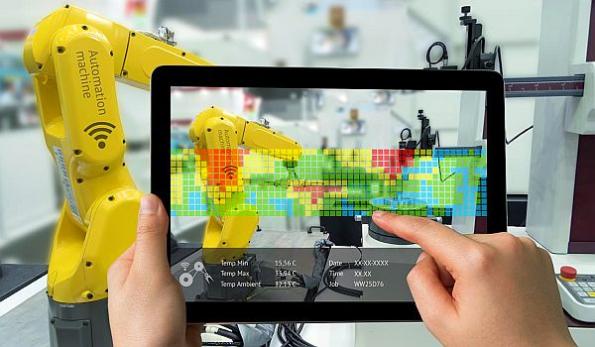
AR is also hitting the shop floor, and industrial manufacturers are increasingly deploying it. Aerospace giant/defense contractor Lockheed Martin is one such company, and their use was chronicled in an EE Times article by George Leopold just last week. They’re using AR technology to build NASA’s Orion spacecraft, which is a crewed vehicle designed for long-duration, deep space exploration.

The company is using AR tools to assemble various Orion components, including the skeletal framework of the spacecraft’s titanium heat shield.

As you can imagine, the tolerances required are plenty strict, and the workflows that have resulted from using AR “have been used to reduce touch labor for Orion spacecraft components, including fasteners and accelerometers with narrow tolerances.”

The company estimates that AR technology has reduced touch labor for drilling by 45 percent and 50 percent for torque applications. The task of tightening Orion’s fasteners was reduced from six weeks to two using AR.

AR, which at Lockheed is based on the Microsoft HoloLens platform, is also useful for displaying “the precise spot where a spacecraft component should be attached. For volume parts like connectors, technicians previously had to manually measure before installing individual components.”

I always enjoy reading about critical applications of emerging technologies. Good to know it’s not just Pokémon GO. Not that there’s anything wrong with Pokémon GO. Just that I’m more interested in industrial-strength, mission critical applications. And that’s the Orion spacecraft in spades.


______________________________________________________________

Source for image: Design News. 

Vroom! Vroom! Cool car tech at CES 2020

Even though the products showcased there are not exactly in the Critical Link wheelhouse, I’m always interested in seeing what’s up at CES, the big consumer electronics show that’s held each January in Las Vegas. And so I avidly read up on the robot that delivers toilet paper (Charmin, to be exact); the Alexa-driven shower head; the smart cat litter box; the TV that goes from horizontal to vertical…

As always, what most captivates me as a car-loving techie, is the automotive technology that’s on display. CNET did a nice round-up of what’s new and cool, saving me a trip to Las Vegas.

Many people associate Bosch with upscale kitchen appliances, but they have a major automotive business. They’re introducing the Bosch Virtual Visor, which they’re hoping will replace the sometimes awkward and unwieldy sun visor we’re all familiar with.

Bosch ‘s Virtual Visor uses transparent LCD screen and an in-car RGB camera which can track the sun shining on the driver’s face. The system then darkens sections of the Virtual Visor to prevent glares, with some 90% of the visor staying transparent at all times, for better visibility. (Source: CNET)

Getting rid of glare without compromising on visibility? What a great idea! Sign me up for this one.

It’s probably a matter of time before all cars and trucks implement Amazon Alexa Integration in ways that go beyond the basics. For a couple of high-end vehicles, Alexa tech is now being used to handle more and more vehicle functions. The companies that are going the furthest include Lamborghini (vroom-vroom) and Rivian (electric cars and trucks). For now, Lamborghini is focusing its Alexa efforts on the Huracan Evo, where Alexa can do things like open and close the trunk. (I did say high-end, didn’t I? This goes from more than $250K.) Lamborghini will be integrating Alexa into its hybrid models, and Alexa will be able to control the switch between driving modes. I’d like to say ‘sign me up for this one,’ but not at that price point! Still, the idea of tight integration between Alexa and actual vehicle control is inevitable.

The BMW ZeroG Lounger seat, which is not yet in production, will be able to recline “either 40 or 60 degrees”, and the “seatbelt moves along with the passenger.” I like the idea that the seatbelt moves, and I hope they keep the recline to 60 degrees. Wouldn’t want to see drivers trying to drive while reclining at, say, 180 degrees. We should wait for fully autonomous driving before we allow that. Other Lounger goodies: a wrap-around “cocoon-style” airbag, and “when the seat is reclined, a screen drops down from the headliner and can show directional information, which combined with the position of the seat, can prevent motion sickness.” Now if they can come up with something that can prevent motion sickness among kids riding in the back seat, they’ll make a lot of parents very happy.

Another emerging automotive technology is the Continental and Sennheiser speakerless audio system. Surround-sounds will be coming at you through the dash, door panels, the car’s headliner. Bonus because being able to go speakerless will cut down on a vehicle’s weight. Anyway, the system is still in the somewhat conceptual stages, but sounds like good, good, good vibrations to me.

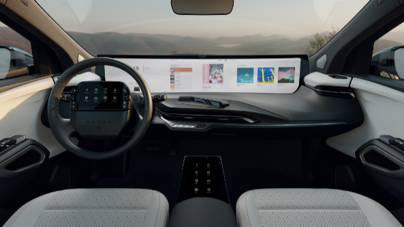
Lastly, CNET listed Byton in-car entertainment partnerships. The Byton M-Byte is an all-electric SUV which was introduced last year at the Frankfurt Motor Show, and which was shown off to US prospects for the first time at CES 2020. (The company is Chinese.) Byton’s going all-in on entertainment, and ViacomCBS and Accuweather are among the providers that will be making content available on the M-Byte’s 48-inch screen. (Yes, you read that right: 48-inch!) As the article’s writer says, “let’s just hope Byton also puts the necessary precautions in place to make sure that people aren’t trying to watch their favorite TV show while out on the open road.” Couldn’t have said it better myself. As far as I’m concerned, having a full-blown entertainment center in your car can wait until we have fully-blown self-driving vehicles.

That’s it for car tech at CES 2020. Vroom, vroom…

20 Technology Forecasts for 2020 (Part Two)

When I began this short series, I mentioned that the forecasts I’d be listing would be in no particular order. That wasn’t quite true, as I saved the ones that are closest to my heart – the ones from the IEEE Computer Society – for last. Here are 10 trends that I culled from their list:

Artificial Intelligence (AI) at the edge (AI@Edge). To date, machine learning (ML) has been cloud-based, but – thanks to 5G and smarter and smarter sensors populating the Internet of Things – the experts at IEEE see ML as moving closer to us, to living on the edge, where it “will have a far greater impact on our daily lives, such as assisted driving, industrial automation, surveillance, and natural language processing.”

Non-volatile memory (NVM) products, interfaces and applications. Non-volatile memory is nothing new, but the forecast that “NVM Express SSD’s will replace SATA and SAS SSDs within the next few years, and NVMe-oF will be the dominant network storage protocol in five years” is new. This technology will enable improved endurance and computational storage, and “allow more memory-like access to data.” Lots of interesting stuff to look forward to here.

Digital twins, including cognitive twins. We see the use of digital twins in the complex systems our technology works in. (A digital twin is a digital version of a physical asset and/or process, and is an example of how AI and the IoT are altering the overall technology-driven landscape. Cognitive digital twins are coming, meaning that digital twins will keep getting smarter and smarter.

AI and critical systems.  Whether we fully embrace it or fear of it unleashes are inner Luddite, there’s no stopping AI. As IEEE sees it, “within five years, there will be a significant increase in the application of AI in critical infrastructure systems, or “critical systems” [which] include power generation and distribution, telecommunications, road and rail transportation, healthcare, banking, and more.”

Practical delivery drones. IEEE thinks that the package delivery system is “ripe for disruption.” They see it happening more rapidly than I do. Personally, I don’t imagine that a drone will be dropping an Amazon box on my front porch anytime soon.

Additive manufacturing. I love the idea of 3D printing, and it’s becoming more and more possible to use it for “mass customization” manufacturing. The example they use is SmileDirect, which deploys “3D printers to generate tens of thousands of molds each day, each customized to make an orthodontic aligner for an individual person.” It’s also moving into other industries: healthcare, footwear, automotive. I’m looking forward to seeing more of this trend.   

Cognitive skills for robots. More better AI is bringing us more better robots, and they’re moving from the shop floor to the office. Not mentioned in this article, but something I read elsewhere: a pretty significant proportion of the workforce wouldn’t mind having a robot for a manager. They were actually talking about chatbot setups, where you interact with an AI-driven system for advice, and not about R2D2. Still… And if you want to see a human or, rather, dog-like robot in action, just google “robot dog climbing stairs.”

AI/ML applied to cybersecurity. This is an inevitable and much needed (and welcome) application of AI/ML. “AI/ML can drive down response times from hundreds of hours to seconds and scale analyst effectiveness from one or two incidents to thousands daily.” Bring it on!

Reliability and safety challenges for intelligent systems. With so much riding on all these AI/ML intelligent systems – systems that are getting more intelligent and more autonomous by the day, and more involved in life-and-death situations – it’s no surprise that “guaranteeing the required high levels of reliability and safety that are mandated for highly autonomous intelligent systems will be one of the major technological challenges to be faced by 2020, to enable a smarter world.”

Quantum Computing. Quantum computing has proven its viability: “At the beginning of 2020, experimental quantum computer demonstrations consume about 1/10,000 the energy of the world’s largest supercomputers while outperforming them by 1,000x or more”. Yet it’s still in search of applications. IEEE predicts that 2020 will be year of demonstrations that are compelling enough to nudge quantum computing from the theoretical to the real.

These are the predictions for 2020 I found most interesting. What are the ones that you’ve got your eye on?

20 Technology Forecasts for 2020 (Part One)

Whenever a new year rolls around, I always like to look back – and look forward. I did some looking back on 2019 in my Thanksgiving post, so now I’m taking a look forward with a roundup of some of the technology forecasts I’ve been reading about for the past couple of weeks. They’re from a number of different sources, and vary from high level market trends to forecasts about very specific technologies. In no particular order, here are the first ten of the twenty trends that caught my eye:

From Forbes/IDC:

These actually go beyond 2020, and most begin with “by 202x”, but 2020 is a springboard year for all things digital. Here’s an interesting one:  “By 2023, IDC predicts, over half (52%) of global GDP will be accounted for by digitally transformed enterprises.” And here’s how it’s going to happen:

Hasten to Innovation: IDC predicts that the majority of Information and Communications Technology “spending will be directly for digital transformation and innovation.” This will nearly double the spend in 2018, and will result in all that digital transformation that they’re predicting.

Connected Clouds: Those digitally transformed enterprises will be managing their clouds, both public and private, “by deploying unified hybrid/multicloud management technologies, tools and processes.” (And things will be happening at the edge, not in corporate datacenters.)

Industry Apps Explosion: If global GDP is going to be all about things digital, this will mean an explosion of digital apps. IDC forecasts there’ll be more than 500 million of them, “most of those targeted at industry specific digital transformation use cases.”

Inescapable AI: A lot of those apps will be using AI. “By 2025, at least 90% of new enterprise apps will embed AI; by 2024, over 50% of user interface interactions will use AI-enabled computer vision, speech, natural language processing and AR/VR.”

From IT ProPortal, where CTO’s had their say (beyond the inevitable ubiquitous AI):

Entertainment will be reinvented. This will come about “through enhanced experience-specific service architectures that support better multi-modal experience design.” These design improvements will include those in the realm of “extended reality and super channel convergence.”

DNA computers, or at least quantum computers. This actually scares the folks at IT ProPortal. If quantum computers can outperform super-computers by orders upon orders of magnitude, it’s a matter of time before someone uses one of those quantum computers to crack the code of even the most sophisticated and complex encryption algorithms. But not to worry too much: “this scenario is still a long way off, quantum-proof encryption services are already popping up.” Phew.

With 2020 being the year of 5G, “it will also be the year rich mobile vision and voice interfaces become the norm.” A bit of local bragging rights here: Syracuse is one of the first cities that will be adopting 5G (from Verizon). “The nearly real-time speeds of 5G will also continue to fuel the rise of haptic interfaces, which transmit the physical sense of touch, stretching them out of just entertainment and into more mainstream applications.” Life is about to get even more interesting…

From Entrepreneur: AI (of course). 5G (of course). And also:

Mobile Commerce: This has been coming on for some time, as more and more people use their smartphone as their computer, as the interfaces have improved, and as security measures have improved. But it’s not just mobile online shopping. Brick and mortar stores, fast food restaurants, any number of spots are encouraging cash- and credit-card free commerce. Just hold up your smartphone and you’re all paid up. Many younger folks no longer carry cash. (I guess it goes without saying that I still do.)

The Decline of APPs. I guess for every prediction, there’s a counter prediction. While IDC foresees a proliferation of apps, Entrepreneur sees the decline. Well, they don’t really see a decline in applications. They see a decline in downloaded apps, as more apps end up in the cloud. Or replaced by Progressive Web Apps, which are an app-like experience that seems a lot like an app by another name (and design).

Alternative-Cryptocurrency Collapse. Bitcoin won the cryptocurrency wars, and now have 69% market share. But the jury’s still out on whether Bitcoin is ever going to become “the future of money.” Then there’s blockchain, which is more likely to become an accepted way of doing business with “more practical applications in healthcare, asset management and intellectual property in 2020.”

In my next edition, I’ll take a look at what the IEEE Computer Society has to say about 2020.

Who’d pay $3,250 for a robot to carry their groceries?

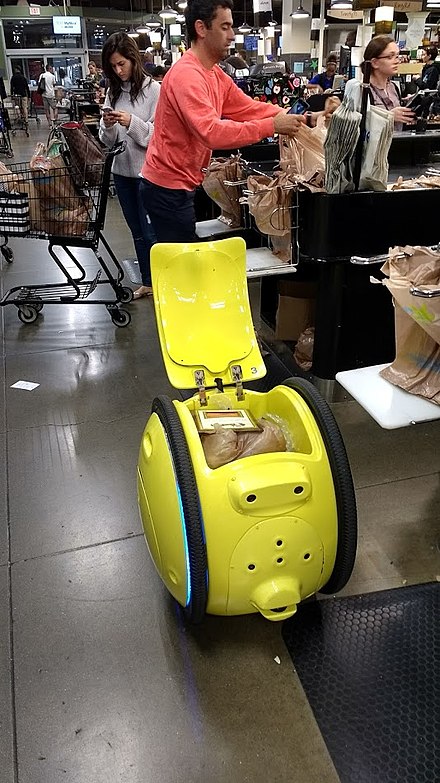
I’m an overall tech person, with a longtime interest in robotics. So I find the growing number of new robotics applications – medical, manufacturing, assistive, even some of those built for a less illustrious purpose – to be an exciting development. And then, occasionally, one will come along that I find to be a head-scratcher. Into this category, I’ll have to place the “gita”, a robot that doesn’t do much other than follow you around and carry 40 pounds of groceries.

The brainchild of Piaggio Fast Forward – a subsidiary of Piaggio, which gave the world the amazingly practical Vespa motor scooter, the gita was first introduced in mid-2017.  As originally conceived, the gita would be able to create maps of frequented terrain so that it could operate autonomously. For the market launch (availability: November 18, 2019), that functionality has been pared down. There is no autonomous mode, so you can’t send the gita off to the store to pick up your groceries. It can only follow you around.

Also pared down was the m.p.h., which went from 22 m.p.h. to 6 m.p.h., which sounds to me like a good thing. The gita weighs 50 pounds, and you wouldn’t want to run into that while it was speeding along at 22 m.p.h. Some of the core technology changed from the original announcement as well, with lidar replaced by computer vision technology that identifies the robot’s owner and “locks onto their body shape.”

The gita has a 4-hour battery life, and recharges, using a regular home outlet, in 2 hours. So that’s all good.

But I just don’t get it.

It can carry 40 pounds worth of groceries, which seems like a good thing if you have trouble carrying things. But it can’t climb stairs, which means when you get those groceries home, and you’ve got any stairs to climb, you’re toting those grocery bags up yourself. And then you have to haul the 50-pound vehicle up. Same problem if you want to get it in and out of your car. How an elderly person lift it? So much for assistive technology.

And there were other design choices that seem to me to come down more on the “cool” side than the practical.

The robot’s creators worked with the Berklee College of Music in Boston to compose a library of distinct sounds — which adjust dynamically according to the volume of ambient noise surrounding the robot — to indicate gita’s battery level or when the robot is ready to pair with its owner. (Source: Washington Post)

While I don’t see this product as being particularly useful, Piaggio Fast Forward has other ideas.

Jeffrey Schnapp, Piaggio Fast Forward co-founder and chief visionary officer, said moving around the world with your hands object-free means a pedestrian can more fully interact with their environment, whether that means being more curious or socializing without distraction.

“We see gita as support for someone’s daily life and an extension of yourself, but we also see it serving as a type of connective tissue among friends,” Schnapp said.

First, the robot’s creators admit, they’ll have to familiarize the public with the idea of a robot that acts as an extension of its owner. When people are shown photos of the robot, Lynn said, some assume the machine is designed to “deliver a burrito to your front door.”

If they’re able to build awareness, the company hopes gita’s appeal will move beyond tech bros and urban millennials looking for an expensive picnic toy. Schnapp said he believes the robot could also appeal to older people or individuals with disabilities, for example, who might benefit from having a machine to help carry groceries and run errands with added support.

“Connective tissue…extension of its owner…” Me? I just don’t see it. $3,250 for something that reminds me of the far cheaper “smart suitcases” built to follow their owners around the airport. (Come to think of it, you don’t see these in real life, either.)

What I find interesting is this statement of one of Piaggio Fast Forward’s core values:

We believe design comes first.

As an engineer, I’m a big believer that what comes first is solving a problem. Don’t get me wrong. Design is important, but for $3,250, you better be delivering something more than a product that looks nifty but doesn’t do all that much.